
Author: Eleanor Stratton
-
First Amendment & Social Media
Historical Context of the First Amendment The First Amendment, born from a wariness of tyrannical control, marks a deliberate effort by the Founding Fathers to guarantee an essential human right—free speech. Forged in the crucible of conflict and philosophical debate, this amendment embodies the principals of a nascent democracy fiercely protective of individual liberty. In…
-
US Bill of Rights Quiz
Understanding Key Amendments The Bill of Rights, the first ten amendments to the United States Constitution, established critical boundaries and preserved numerous freedoms. The First Amendment safeguards freedoms of speech, religion, press, assembly, and petition. It reflects the Founders' aim to encourage open discourse and diverse opinions. The Second Amendment addresses the right to keep…
-

Unsung Founding Fathers
1. Roger Sherman: The Master of Compromise Roger Sherman distinguished himself as a critical figure at the Constitutional Convention. Known for his ability to forge unanimity among diverse opinions, Sherman devised the Connecticut Compromise, which resolved an impasse between small and large states. This compromise shaped the structure of the U.S. Congress, balancing representation by…
-
SCOTUS & Climate Policy
Major Questions Doctrine The Supreme Court's adoption of the Major Questions Doctrine represents a critical pivot in how federal agencies may regulate environmental and other significant policies. The doctrine necessitates clear and explicit congressional authorization for any regulatory actions that carry major economic and political significance. In practice, this means that previous implicit understandings and…
-
SCOTUS vs. Presidential Power
Historical Context of the 14th Amendment The 14th Amendment emerged from the aftermath of the American Civil War. Established in 1868, it aimed to redefine the nation's civil and legal landscape during the reintegration of Southern states into the Union. The amendment's architects sought to prevent former Confederates from regaining control over legislative structures. Section…
-

ERA Failure & Relevance
Historical Context and Initial Proposal of the ERA Alice Paul drafted the original Equal Rights Amendment in 1923, just three years after women secured the right to vote through the Nineteenth Amendment. Her goal was to ensure gender equality in all areas of American law. Paul had experience with the British women's suffrage movement and…
-
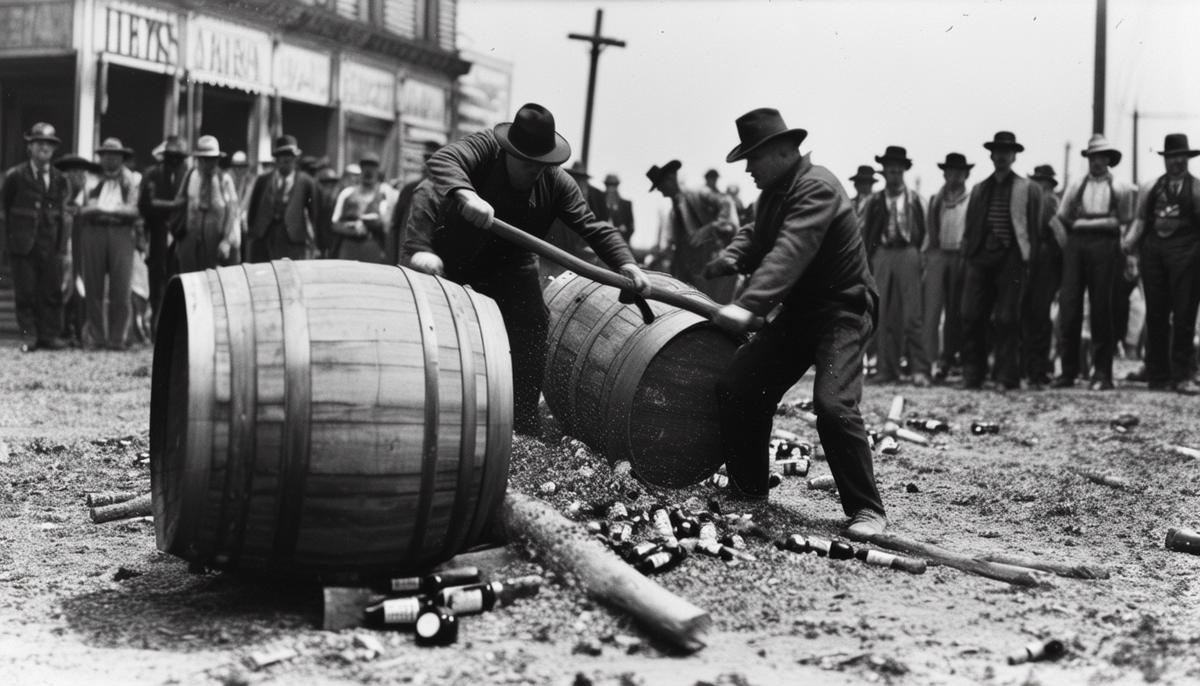
18th & 21st Amendments Evolution
Origins and Impact of the 18th Amendment The Eighteenth Amendment emerged from a century-long temperance crusade, rooted in social reform and moral aspiration, with ratification achieved on January 16, 1919. This legal act prohibited alcohol production, sale, and transportation. The temperance movement, originally propelled by concerns over alcohol-induced social ills, gained significant momentum by the…
-
Founding Fathers & Gun Rights
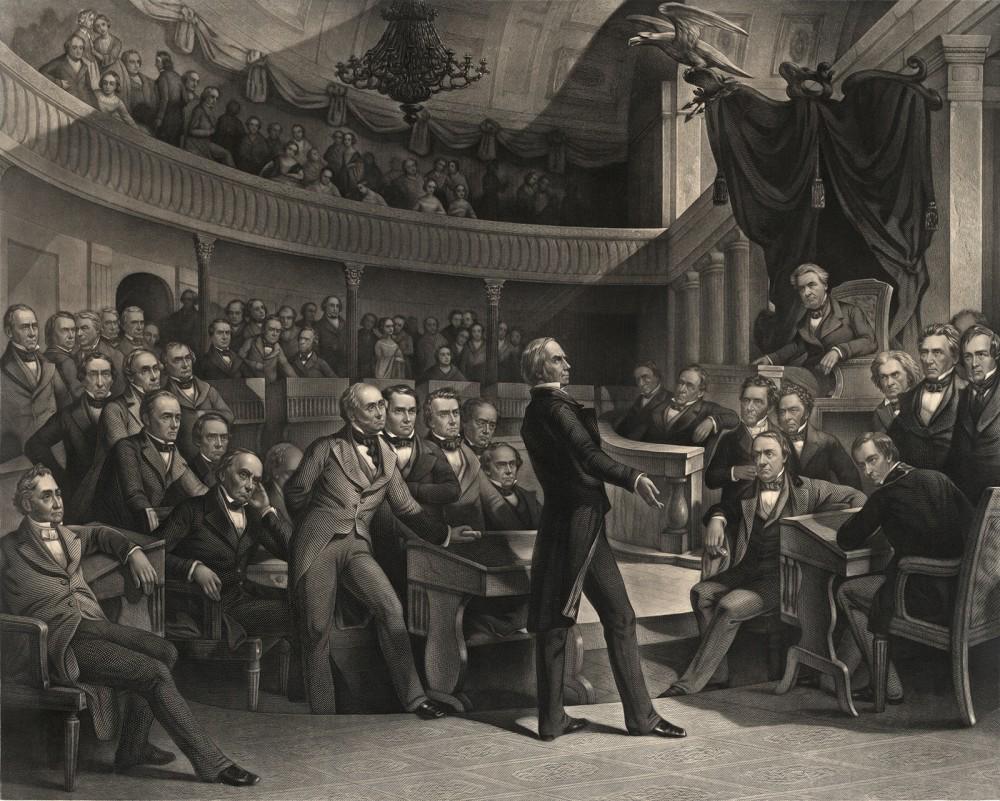
Historical Context of the Second Amendment The early American colonists' concerns and experience with military power significantly shaped the drafting of the Second Amendment. The English Bill of Rights of 1689 had previously laid ground that protestants may bear arms as suited to their conditions, based largely on tensions over how the English Crown used…
-
14th Amendment & Birthright Citizenship
Historical Context of the 14th Amendment The period leading to the ratification of the 14th Amendment was marked by the Civil War and the Abolitionist Movement. This amendment, introduced in 1866 and ratified in 1868, was aimed primarily at securing the rights of newly freed slaves. The Abolitionist Movement helped spark the Civil War, which…
-

Emoluments Clause & Presidential Business
Understanding the Emoluments Clause The Emoluments Clause, articulated in the U.S. Constitution, serves as a safeguard designed to bar federal officeholders from receiving any gifts, offices, titles, or emoluments from foreign states without congressional consent. Embedded within this legal framework are two distinct provisions: the Foreign Emoluments Clause and the Domestic Emoluments Clause. The Foreign…
-
Electoral College Explained
Historical Development The Electoral College, as outlined in Article II, Section 1 of the U.S. Constitution, was established as a compromise between election of the President by Congress and election by popular vote. The founders aimed to form a buffer between population and the selection of a President, which originally involved electors chosen by the…
-
First Amendment Assembly Rights
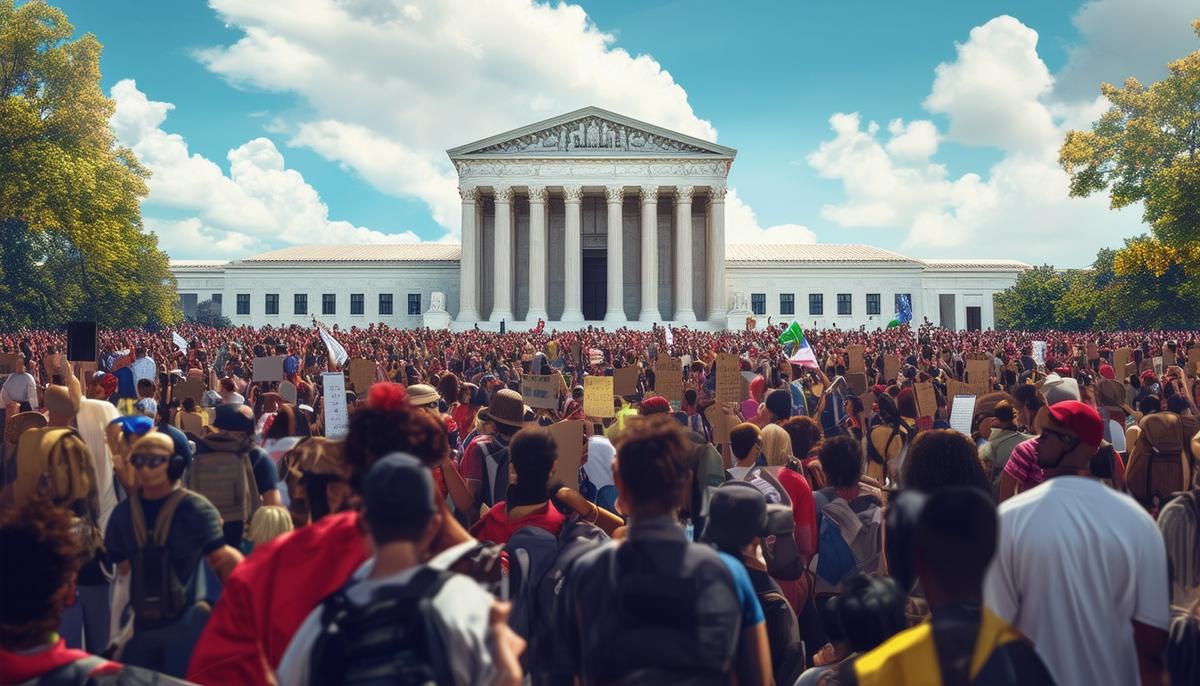
Historical Evolution of Assembly Rights The right to assemble peacefully is deeply rooted in the historical legal landscape, anchoring its importance in democratic practices. Initially, the Magna Carta, a cornerstone of English constitutional law in 1215, indirectly supported the right to freedom of assembly through clauses aimed at ensuring justice and resisting oppression. By the…
-
First Amendment Speech Rights
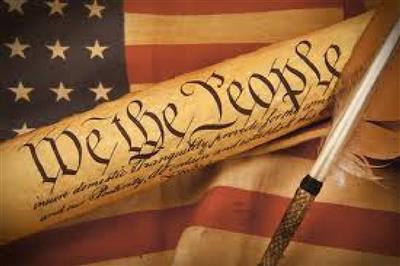
Historical Evolution of Free Speech The First Amendment, a pillar of American democracy, enshrines freedom of speech among its key protections. This right has experienced an evolving interpretation since its inception in 1791. Initially, its boundaries were not clearly defined, leaving significant room for legal battles and societal debate over what constitutes protected speech. In…
-
First Amendment Press Freedom
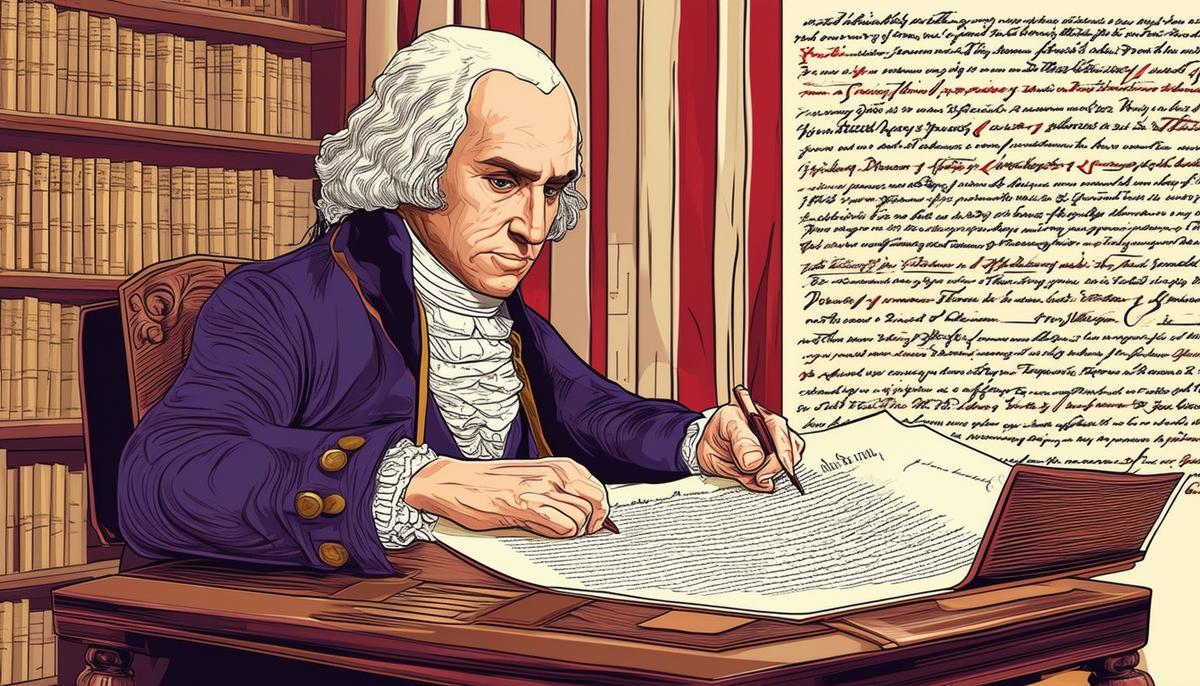
Historical Context of the First Amendment The First Amendment, influenced by the philosophical ideals of the Enlightenment, reflects the passionate debates that shaped the American republic. Figures like Thomas Jefferson and James Madison, inspired by Enlightenment thinkers such as John Locke, advocated for the virtues of freedom and democracy. Jefferson and Madison were strong supporters…
-

Presidential Absolute Immunity
What is presidential absolute immunity? Presidential absolute immunity shields a sitting president from civil lawsuits stemming from actions within the "outer perimeter" of official duties. Established in notable cases such as Nixon v. Fitzgerald, the doctrine finds its roots in the needs of efficient government functioning under a system of separated powers. This legal principle…
-

Top John Adams Quotes
1. Moral Authority and Power John Adams once underscored the gravity of moral authority in governance, stating, Because power corrupts, society's demands for moral authority and character increase as the importance of the position increases. This assertion highlights the essential balance between power held and the moral backbone needed to wield it responsibly. As individuals…
-
Top 10 George Washington Quotes
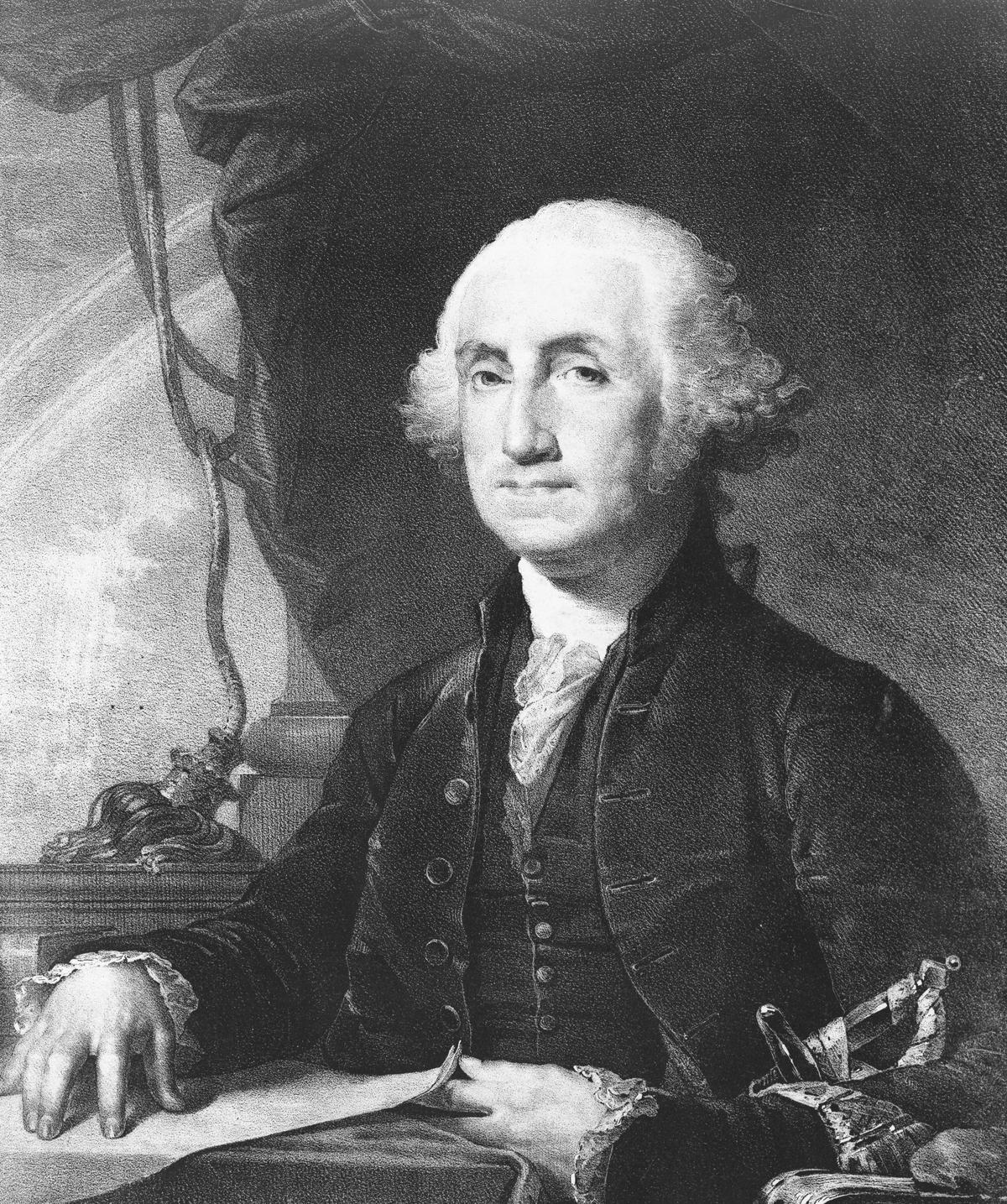
1. Honesty as Policy "I hold the maxim no less applicable to public than to private affairs, that honesty is the best policy." — George Washington This quote captures George Washington's advocacy for truthfulness in all aspects of life. Upholding honesty, whether managing personal relationships or steering nation-wide policies, builds trust between all parties involved.…
-
US Constitution FAQs
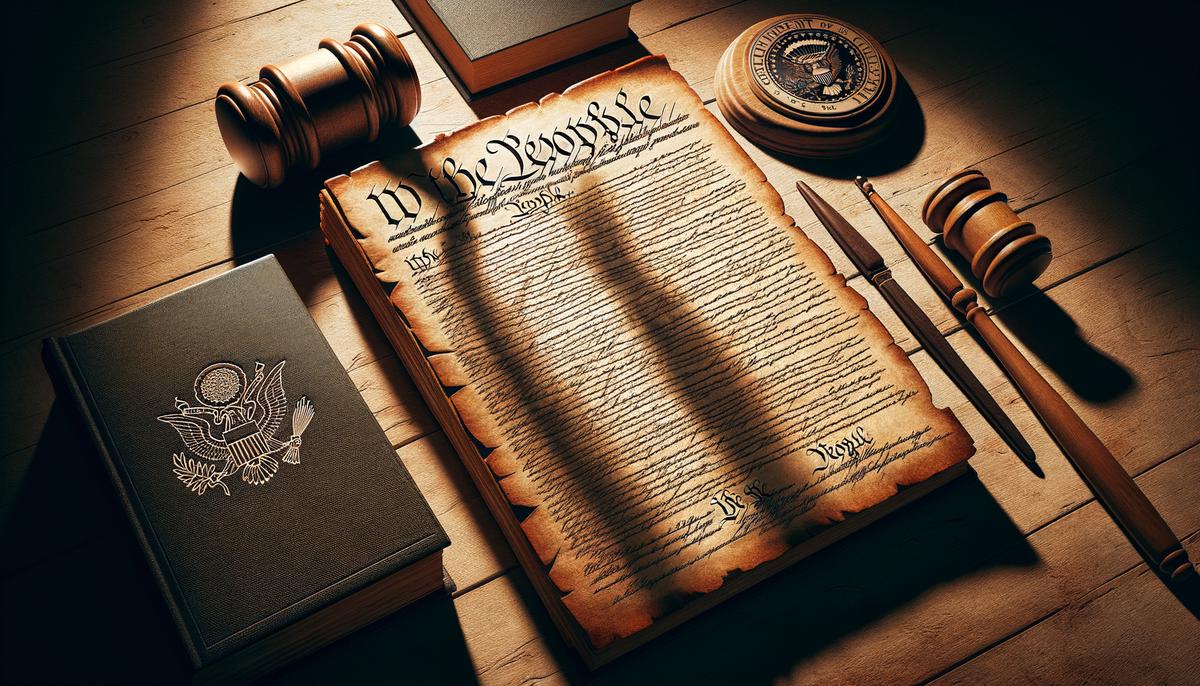
What is the US Constitution? The U.S. Constitution is the supreme law of the United States, establishing a framework for governance and delineating the structure, powers, and limitations of the federal government. It divides power among the legislative, executive, and judicial branches. The Constitution features a Preamble, seven original Articles, and Amendments, including the Bill…
-
First Amendment & Religion
Understanding the Establishment Clause The Establishment Clause of the First Amendment to the U.S. Constitution states, “Congress shall make no law respecting an establishment of religion,” which primarily signifies a prohibition against the government establishing a state-backed religion or showing preference for one religion over another. The framers of the Constitution, influenced by the oppressive…
-
The Constitution for Kids (Kindergarten – 3rd Grade) – The U.S. Constitution Online – USConstitution.net
This file is intended for students in Kindergarten through 3rd grade. Other versions of this page are available: The Constitution for Kids: 4th through 7th Grade The Constitution for Kids: 8th through 12th Grade Pictures of the Constitution The main site If you have any questions about any words or ideas on this page, please…
-
The Constitution for Kids (4th-7th Grade) – The U.S. Constitution Online – USConstitution.net
This file is intended for students in grades 4 through 7. Other versions of this page are available: The Constitution for Kids: Kindergarten through 3rd Grade The Constitution for Kids: 8th through 12th Grade Pictures of the Constitution The main site Want to change this page’s colors? Choose a new skin! If you have any…
-
The Constitution for Kids (8th-12th Grade) – The U.S. Constitution Online – USConstitution.net
This file is intended for students in grades 8 through 12. Other versions of this page are available: The Constitution for Kids: Kindergarten through 3rd Grade The Constitution for Kids: 4th through 7th Grade Pictures of the Constitution The main site Want to change this page’s colors? Choose a new skin! The impetus for this…
-
U.S. Constitution – Amendment 9 – The U.S. Constitution Online – USConstitution.net
U.S. Constitution – Amendment 9 Amendment 9 – Construction of Constitution <<Back | Table of Contents | Next>> The enumeration in the Constitution, of certain rights, shall not be construed to deny or disparage others retained by the people. Notes for this amendment: Proposed 9/25/1789 Ratified 12/15/1791 <<Back | Table of Contents | Next>> |Home|…
-
U.S. Constitution – Amendment 8 – The U.S. Constitution Online – USConstitution.net
U.S. Constitution – Amendment 8 Amendment 8 – Cruel and Unusual Punishment <<Back | Table of Contents | Next>> Excessive bail shall not be required, nor excessive fines imposed, nor cruel and unusual punishments inflicted. Notes for this amendment: Proposed 9/25/1789 Ratified 12/15/1791 <<Back | Table of Contents | Next>> |Home| |Constitution| |FAQ| |Topics| |Forums|…
-
U.S. Constitution – Amendment 7 – The U.S. Constitution Online – USConstitution.net
U.S. Constitution – Amendment 7 Amendment 7 – Trial by Jury in Civil Cases <<Back | Table of Contents | Next>> In Suits at common law, where the value in controversy shall exceed twenty dollars, the right of trial by jury shall be preserved, and no fact tried by a jury, shall be otherwise re-examined…
-
U.S. Constitution – Amendment 6 – The U.S. Constitution Online – USConstitution.net
U.S. Constitution – Amendment 6 Amendment 6 – Right to Speedy Trial, Confrontation of Witnesses <<Back | Table of Contents | Next>> In all criminal prosecutions, the accused shall enjoy the right to a speedy and public trial, by an impartial jury of the State and district wherein the crime shall have been committed, which…
-
U.S. Constitution – Amendment 5 – The U.S. Constitution Online – USConstitution.net
U.S. Constitution – Amendment 5 Amendment 5 – Trial and Punishment, Compensation for Takings <<Back | Table of Contents | Next>> No person shall be held to answer for a capital, or otherwise infamous crime, unless on a presentment or indictment of a Grand Jury, except in cases arising in the land or naval forces,…
-
U.S. Constitution – Amendment 4 – The U.S. Constitution Online – USConstitution.net
U.S. Constitution – Amendment 4 Amendment 4 – Search and Seizure <<Back | Table of Contents | Next>> The right of the people to be secure in their persons, houses, papers, and effects, against unreasonable searches and seizures, shall not be violated, and no Warrants shall issue, but upon probable cause, supported by Oath or…
-
U.S. Constitution – Amendment 3 – The U.S. Constitution Online – USConstitution.net
U.S. Constitution – Amendment 3 Amendment 3 – Quartering of Soldiers <<Back | Table of Contents | Next>> No Soldier shall, in time of peace be quartered in any house, without the consent of the Owner, nor in time of war, but in a manner to be prescribed by law. Notes for this amendment: Proposed…
-
U.S. Constitution – Amendment 27 – The U.S. Constitution Online – USConstitution.net
U.S. Constitution – Amendment 27 Amendment 27 – Limiting Changes to Congressional Pay <<Back | Table of Contents | Next>> No law, varying the compensation for the services of the Senators and Representatives, shall take effect, until an election of Representatives shall have intervened. Notes for this amendment: Proposed 9/25/1789 Ratified 5/7/1992 History Article 1,…
-
U.S. Constitution – Amendment 26 – The U.S. Constitution Online – USConstitution.net
U.S. Constitution – Amendment 26 Amendment 26 – Voting Age Set to 18 Years <<Back | Table of Contents | Next>> 1. The right of citizens of the United States, who are eighteen years of age or older, to vote shall not be denied or abridged by the United States or by any State on…
-
U.S. Constitution – Amendment 25 – The U.S. Constitution Online – USConstitution.net
U.S. Constitution – Amendment 25 Amendment 25 – Presidential Disability and Succession <<Back | Table of Contents | Next>> 1. In case of the removal of the President from office or of his death or resignation, the Vice President shall become President. 2. Whenever there is a vacancy in the office of the Vice President,…
-
U.S. Constitution – Amendment 24 – The U.S. Constitution Online – USConstitution.net
U.S. Constitution – Amendment 24 Amendment 24 – Poll Tax Barred <<Back | Table of Contents | Next>> 1. The right of citizens of the United States to vote in any primary or other election for President or Vice President, for electors for President or Vice President, or for Senator or Representative in Congress, shall…
-
U.S. Constitution – Amendment 23 – The U.S. Constitution Online – USConstitution.net
U.S. Constitution – Amendment 23 Amendment 23 – Presidential Vote for District of Columbia <<Back | Table of Contents | Next>> 1. The District constituting the seat of Government of the United States shall appoint in such manner as the Congress may direct: A number of electors of President and Vice President equal to the…
-
U.S. Constitution – Amendment 22 – The U.S. Constitution Online – USConstitution.net
U.S. Constitution – Amendment 22 Amendment 22 – Presidential Term Limits <<Back | Table of Contents | Next>> 1. No person shall be elected to the office of the President more than twice, and no person who has held the office of President, or acted as President, for more than two years of a term…
-
U.S. Constitution – Amendment 21 – The U.S. Constitution Online – USConstitution.net
U.S. Constitution – Amendment 21 Amendment 21 – 18th Amendment Repealed <<Back | Table of Contents | Next>> 1. The eighteenth article of amendment to the Constitution of the United States is hereby repealed. 2. The transportation or importation into any State, Territory, or possession of the United States for delivery or use therein of…
-
U.S. Constitution – Amendment 20 – The U.S. Constitution Online – USConstitution.net
U.S. Constitution – Amendment 20 Amendment 20 – Presidential, Congressional Terms <<Back | Table of Contents | Next>> 1. The terms of the President and Vice President shall end at noon on the 20th day of January, and the terms of Senators and Representatives at noon on the 3d day of January, of the years…
-
U.S. Constitution – Amendment 2 – The U.S. Constitution Online – USConstitution.net
U.S. Constitution – Amendment 2 Amendment 2 – Right to Bear Arms <<Back | Table of Contents | Next>> A well regulated Militia, being necessary to the security of a free State, the right of the people to keep and bear Arms, shall not be infringed. Notes for this amendment: Proposed 9/25/1789 Ratified 12/15/1791 Note…
-
U.S. Constitution – Amendment 19 – The U.S. Constitution Online – USConstitution.net
U.S. Constitution – Amendment 19 Amendment 19 – Women’s Suffrage <<Back | Table of Contents | Next>> The right of citizens of the United States to vote shall not be denied or abridged by the United States or by any State on account of sex. Congress shall have power to enforce this article by appropriate…
-
U.S. Constitution – Amendment 18 – The U.S. Constitution Online – USConstitution.net
U.S. Constitution – Amendment 18 Amendment 18 – Liquor Abolished <<Back | Table of Contents | Next>> 1. After one year from the ratification of this article the manufacture, sale, or transportation of intoxicating liquors within, the importation thereof into, or the exportation thereof from the United States and all territory subject to the jurisdiction…
-
U.S. Constitution – Amendment 17 – The U.S. Constitution Online – USConstitution.net
U.S. Constitution – Amendment 17 Amendment 17 – Senators Elected by Popular Vote <<Back | Table of Contents | Next>> The Senate of the United States shall be composed of two Senators from each State, elected by the people thereof, for six years; and each Senator shall have one vote. The electors in each State…
-
U.S. Constitution – Amendment 16 – The U.S. Constitution Online – USConstitution.net
U.S. Constitution – Amendment 16 Amendment 16 – Status of Income Tax Clarified <<Back | Table of Contents | Next>> The Congress shall have power to lay and collect taxes on incomes, from whatever source derived, without apportionment among the several States, and without regard to any census or enumeration. Notes for this amendment: Proposed…
-
God in the State Constitutions – The U.S. Constitution Online – USConstitution.net
God in the State Constitutions Advertisement The subject of God in the Constitution arises from time to time, and this site deals with the topic specifically elsewhere. However, another question also arises: how is God referenced, if at all, in state constitutions? This list is not guaranteed to be exhaustive, but it attempts to be.…
-
State Constitutions – The U.S. Constitution Online – USConstitution.net
State Constitutions Each state in the United States has its own constitution. Of course, all state constitutions are inferior (in a legal sense) to the United States Constitution, and when reading state constitutions, this must be kept in mind — a state constitution, for example, cannot validly authorize a state religion. However, many state constitutions…
-
The Emancipation Proclamation – The U.S. Constitution Online – USConstitution.net
The Emancipation Proclamation During the course of the Civil War, Lincoln had wanted to declare all slaves free. He waited, however, until the Union forces had some decisive victories over the Rebels; no doubt his holding off was to prevent giving the South a rallying point until one would have no effect on the outcome…
-
The I Have a Dream Speech – The U.S. Constitution Online – USConstitution.net
The I Have a Dream Speech Advertisement In 1950’s America, the equality of man envisioned by the Declaration of Independence was far from a reality. People of color — blacks, Hispanics, Asians — were discriminated against in many ways, both overt and covert. The 1950’s were a turbulent time in America, when racial barriers began…
-
The Declaration of Independence – The U.S. Constitution Online – USConstitution.net
The Declaration of Independence The Declaration of Independence Topic Page may be of some interest to readers. Demographic data about the Signers is also available. An image of the Declaration is available. Contents Introduction Crimes of the King Conclusion Signatories In Congress, July 4, 1776 The unanimous Declaration of the thirteen united States of America…
-
Constitution of the Confederate States of America – The U.S. Constitution Online – USConstitution.net
Constitution of the Confederate States of America Advertisement The following is the complete text of the Constitution of the Confederate States of America, as adopted on March 11, 1861. The text of the CSA Constitution was verified at the University of Oklahoma and the Library of Congress and was marked up for Web display by…
-
The American’s Creed – The U.S. Constitution Online – USConstitution.net
The American’s Creed The American’s Creed was written in 1917 by William Tyler Page, an employee in the House. The Creed was one of 3000 entries in a contest sponsored by the New York Commissioner of Education. In 1919, Page was elected Clerk of the U.S. House of Representatives. When the majority party in the…
-
The Convention Timeline – The U.S. Constitution Online – USConstitution.net
The Convention Timeline Advertisement This timeline is a companion to the Main Timeline on this site. While that timeline attempts to put world and national events into some chronological perspective, this timeline intends to get into the details of the Constitutional Convention and the ratification process. A list of members of various committees is also…
-
Common Misspellings in Search – The U.S. Constitution Online – USConstitution.net
Common Misspellings in Search Advertisement After I implemented the Search Engine on this site, I began to watch what people were searching for, to get a good indication of the sorts of topics I should add to the site. In the process, I’ve seen some interesting word spellings. I added this page for those who…
-
Justices of the Supreme Court – The U.S. Constitution Online – USConstitution.net
Justices of the Supreme Court Justices of the Supreme Court are appointed for life by the president and confirmed by the Senate. Because of the lifetime appointment, the position of Justice is seen as a very powerful one. A Justice can sit on the bench through several presidencies and as the Congress changes hands from…
-
Data on the Framers of the Constitution – The U.S. Constitution Online – USConstitution.net
Data on the Framers of the Constitution For short character sketches of each of the Framers, see the Framers Page. This page contains demographical data about each of the framers, including some not sketched on the aforementioned page. A similar data table is available for the Signers of the Declaration of Independence and for the…
-
The Framers of the Constitution – The U.S. Constitution Online – USConstitution.net
The Framers of the Constitution Advertisement William Pierce, of Georgia, spoke very little at the Constitutional Convention, but his contributions to what we know of the other delegates to the Convention are invaluable. He wrote short character sketches of each of the delegates; he himself had to leave the Convention early for business reasons. He…
-
Committees at the Constitutional Convention – The U.S. Constitution Online – USConstitution.net
Committees at the Constitutional Convention Advertisement Several notable committees met during the creation of the Constitution. These committees are referred to in the Convention Topic Page and the Convention Timeline. This page used James Madison’s notes from the convention as source material for providing the members of these committees. Members of various committees in the…
-
Members of Congress – The U.S. Constitution Online – USConstitution.net
Members of Congress The following is a list of the Senators and Representatives of the 112th Congress, as of January 5, 2011. If you see any discrepancies, please let me know. In the “Party” column, the following abbreviations are used: D = Democratic R = Republican I = Independent – = Vacant NV = Non-Voting…
-
Signers of The Articles of Confederation
The signers of America’s first constitution, the Articles of Confederation, are less well-known than those of the Constitution or the Declaration of Independence, but they are no less important to our history. Some basic demographic information about these men is presented below. Name State Place of Birth Birth Date Death Date Occupation Religion Adams, Andrew…